
Lianhe Zaobao - Peak Energy Interview: Singapore’s Renewables Momentum
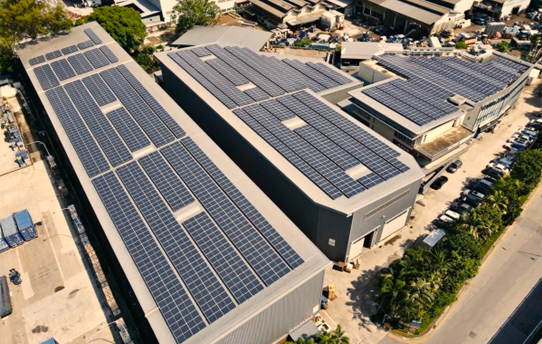
Our recent interview with Lianhe Zaobao came at a pivotal moment for Singapore’s energy system. In a year marked by geopolitical shocks and fuel price swings, Peak Energy’s acquisition of nearly 10MW of operating rooftop solar signals confidence in Singapore’s long‑term renewable fundamentals, not a reaction to short‑term commodity price spikes.
We are grateful to Lianhe Zaobao for the opportunity to share our perspective on how volatility in the Middle East and global energy markets is shaping the renewable landscape in Singapore. Their coverage highlights a core message: domestic renewable capacity is becoming a strategic asset for Singapore’s economy, not just a climate solution. In a land‑constrained city‑state that relies heavily on imported fuels, every additional megawatt of local, price‑stable solar generation helps strengthen business continuity and cost predictability for major employers.
The 10MW portfolio we have acquired builds directly on this logic. In Singapore, utility‑scale solar parks are not feasible at scale. That means meeting large corporate demand for cleaner and more stable energy depends on aggregating many distributed rooftop systems into bankable, standardised offerings. This acquisition expands the volume of operating capacity we can bring under one platform, allowing us to offer fixed‑price contracts that align with Singapore’s upgraded 2030 solar ambitions.
Crucially, this move is part of a long‑term aggregation strategy that has been in development for years across Asia. We are seeing sustained, structural demand from corporates for locally generated renewable energy – demand that is encouraged by the Singapore government’s decarbonisation plans and concern for energy security. Recent oil price increases may sharpen boardroom conversations, but they did not drive our investment decision. Our focus is on serving the long‑term needs of Singapore’s industrial and commercial base.
Seen through this lens, the Lianhe Zaobao interview is more than media coverage. It reflects a broader shift in how Singapore discusses energy: away from viewing renewables as a niche add‑on, and toward recognising them as a foundation for a more resilient, diversified and competitive economy.
How Singapore corporates gain from locally delivered rooftop solar
For large energy users in Singapore, the central question is no longer whether to move to renewable energy, but how to secure solutions that combine cost savings, stability and credibility over the next decade or more. Locally delivered rooftop solar meets this need by providing clean power that is physically tied to the same grid where corporates consume electricity.
In practice, this matters for three reasons. First, rooftop solar helps companies reduce exposure to imported fuel volatility, especially liquefied natural gas (LNG), which still supplies around 95% of Singapore’s electricity. Second, it improves long‑term price visibility: fixed‑price solar contracts make budgeting easier and help finance teams plan confidently beyond the next six or twelve months. Third, it strengthens companies’ decarbonisation credentials at a time when regulators, investors and customers are all demanding clearer climate action.
Our 10MW acquisition increases the pool of operating domestic capacity that can be aggregated into long‑term power purchase agreements and virtual PPAs for Singapore‑based corporates. Rather than buying energy on a purely short‑term basis, companies can lock in multi‑year arrangements that stabilise part of their energy costs and provide a clear emissions reduction pathway. In a trade‑oriented economy where manufacturing, logistics and data‑driven services depend on reliable electricity, this stability quickly translates into competitive advantage.
Regulatory and market trends are reinforcing this shift toward local supply. Proposed updates to the GHG Protocol Scope 2 Guidance may require renewable energy certificates to be matched more tightly to the location and timing of actual electricity use. That would make certificates sourced from distant grids less effective in demonstrating climate impact. By contrast, buying from domestic rooftop portfolios gives corporates a solution that can stand up to future scrutiny from auditors, investors and customers.
From our day‑to‑day conversations, we see Singapore corporates increasingly prioritising procurement options they can defend over the long term. Rooftop solar is not just a technical asset; it is a governance and risk management tool. As geopolitical risks and climate expectations grow, boards want energy arrangements that are transparent, auditable and aligned with Singapore’s national transition pathway.
Energy volatility, Middle East risks and the case for diversification
Recent developments in the Middle East have been a powerful reminder that global energy markets remain vulnerable to geopolitical shocks. For Singapore, which has long depended on imported fuels, this volatility reinforces the importance of building a diversified, resilient energy base that combines imports with a stronger layer of domestic renewables.
Rising oil and gas prices typically flow through into higher electricity tariffs, particularly for large industrial and commercial consumers. As the Lianhe Zaobao article noted, local electricity retailers have already adjusted prices upward in response to global events. This is not unique to Singapore, but it is amplified here by the country’s limited domestic energy resources and open, trade‑oriented economy.
In this environment, corporate decision‑makers are reassessing their energy procurement strategies. While cross‑border low‑carbon imports from neighbouring countries will remain important over time, they involve complex infrastructure, regulatory approvals and long‑term negotiations. By contrast, domestic rooftop solar can be deployed and contracted relatively quickly, providing a tangible hedge against external shocks.
At Peak Energy, we see volatility as a catalyst rather than the primary driver of renewable adoption. Our investments are planned on multi‑year horizons and anchored in the structural reality that renewables are now cheaper than fossil alternatives across most use cases. However, each new episode of geopolitical disruption pushes energy resilience higher up the corporate agenda and accelerates conversations that might otherwise have taken years.
There is also a broader economic dimension. In a highly open economy, the willingness of companies to invest, expand and retain jobs depends on the predictability of critical inputs like energy. By growing local renewable capacity, Singapore reduces its vulnerability to sudden price spikes and supply interruptions, which in turn safeguards its position as a regional hub for manufacturing, logistics and advanced services. Our 10MW rooftop portfolio is a modest but concrete contribution to this diversification effort.
Looking ahead: a resilient, decarbonised energy future for Singapore
Looking forward, we expect short‑term energy price swings to continue, but we do not see them changing the underlying direction of travel. The long‑term case for domestic, diversified renewables in Singapore is structural, driven by land constraints, decarbonisation commitments and the need for economic resilience rather than by any single geopolitical event.
In the near term, corporate energy buyers will still need to manage exposure to global fuel markets. Some will focus on cost discipline and risk hedging around conventional power procurement. Others will move more decisively into renewables, locking in long‑term agreements that provide both savings and stability. Over time, we believe the latter approach will become the norm for leading industrial and commercial players.
For Peak Energy, the 10MW acquisition is a building block in a broader regional strategy to develop, own and operate renewable assets that support Asia’s growth with cleaner, cheaper power. In Singapore specifically, expanding rooftop capacity allows us to offer larger, more standardised contracts that match the scale and expectations of major corporates. With the backing of long‑term infrastructure capital, we can combine operating portfolios like this one with new developments to support the city‑state’s upgraded 2030 solar ambitions.
We again thank Lianhe Zaobao for spotlighting the link between global energy volatility and Singapore’s renewable transition. Public discussion and media scrutiny help ensure that energy choices are evaluated not only on short‑term price, but also on resilience, competitiveness and climate impact. As more companies seek bankable, locally delivered renewable solutions, we are committed to partnering with them over the long term.
Ultimately, Singapore’s energy transition will be gradual rather than explosive, constrained by land, intermittency and grid considerations. But each additional megawatt of rooftop solar brings the system closer to a future where businesses can plan with confidence, even in a volatile world. Our role is to help translate that potential into operating capacity that delivers real‑world benefits for Singaporean corporates today.
Full story here: 伊朗战争等地缘风险 加速新加坡可再生能源投资 | 联合早报
Related
Lorem ipsum dolor sit amet, consectetur adipiscing elit.

Blog title heading will go here

Blog title heading will go here
Blog title heading will go here